
12 Night Routine Tips for Better Sleep
Written by Emma ·
A good night’s sleep is essential for your physical health, mental clarity, and emotional balance. Yet many people struggle with poor sleep due to stress, screen time, unhealthy habits, or inconsistent schedules. When your sleep suffers, your mood, energy, and productivity often decline as well.
The good news is that improving your sleep does not always require major changes. Small nightly habits can significantly improve sleep quality over time. A healthy night routine helps your mind relax, prepares your body for rest, and supports deeper, more refreshing sleep.
This guide shares 12 practical night routine tips that can help you fall asleep faster, sleep better, and wake up feeling refreshed.

Why a Night Routine Matters
Your body follows a natural sleep-wake cycle known as the circadian rhythm. Consistent evening habits help regulate this cycle.
A strong night routine can:
- Improve sleep quality
- Reduce stress
- Help you fall asleep faster
- Increase morning energy
- Support mental and physical health
Good sleep starts before your head hits the pillow.
1. Set a Consistent Sleep Schedule
Going to bed and waking up at the same time every day helps regulate your internal clock.
When your body knows when to sleep, falling asleep becomes easier.
Tip:
Even on weekends, try to keep your schedule consistent.
2. Limit Screen Time Before Bed
Phones, tablets, and TVs emit blue light, which can interfere with melatonin production.
Melatonin is the hormone that helps you sleep.
Better Habit:
Turn off screens at least 30–60 minutes before bedtime.
3. Create a Relaxing Bedroom Environment
Your bedroom should support sleep.
Ideal sleep environment:
- Cool temperature
- Dim lighting
- Quiet surroundings
- Comfortable bedding
A calm space helps your brain associate your room with rest.

4. Avoid Heavy Meals Late at Night
Eating large meals before bed can cause discomfort and disrupt sleep.
Better Choices:
- Herbal tea
- Light snacks
- Bananas
- Yogurt
Avoid spicy or greasy foods close to bedtime.
5. Reduce Caffeine Intake
Caffeine can stay in your system for hours and affect sleep.
Sources:
- Coffee
- Tea
- Energy drinks
- Soda
Try to avoid caffeine in the evening.

6. Practice Relaxation Techniques
Stress often makes it difficult to sleep.
Helpful practices:
- Deep breathing
- Meditation
- Gentle stretching
- Journaling
Relaxation calms the nervous system and prepares you for rest.
7. Take a Warm Shower or Bath
Warm water helps relax muscles and lower stress.
It can also support your body’s natural sleep process.
Tip:
Take a warm shower 1–2 hours before bed.

8. Keep Your Room Dark
Darkness signals your brain to produce melatonin.
Improve darkness by:
- Using blackout curtains
- Turning off bright lights
- Avoiding phone screens
A dark room supports deeper sleep.
9. Read a Book Instead of Scrolling
Reading can calm your mind and reduce overstimulation.
Choose relaxing or light reading rather than intense topics.
Benefit:
Reading creates a peaceful transition to sleep.

10. Write Down Tomorrow’s Tasks
Overthinking can keep you awake.
Writing down your plans can clear mental clutter.
Try:
- To-do lists
- Gratitude journals
- Daily reflections
This simple step can reduce nighttime anxiety.
11. Wear Comfortable Sleepwear
Loose, breathable clothing improves comfort.
Best materials:
- Cotton
- Soft fabrics
- Lightweight pajamas
Comfort plays an important role in sleep quality.

12. Avoid Naps Too Late in the Day
Long evening naps can interfere with nighttime sleep.
Better Practice:
If you nap, keep it short and earlier in the day.
This helps preserve nighttime sleep pressure.
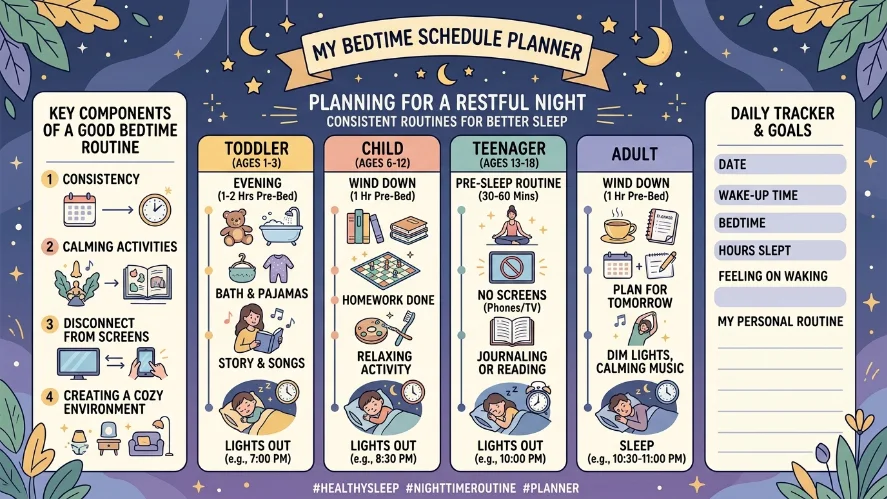
Sample Night Routine for Better Sleep
2 Hours Before Bed:
- Finish dinner
- Avoid caffeine
- Reduce bright lights
1 Hour Before Bed:
- Put away screens
- Shower
- Light stretching
30 Minutes Before Bed:
- Read
- Journal
- Practice deep breathing
Bedtime:
- Sleep in a cool, dark room
Common Mistakes That Hurt Sleep
Inconsistent Sleep Schedule
Disrupts your body clock.
Late-Night Screen Use
Reduces melatonin production.
Stress and Overthinking
Keeps your mind active.
Poor Sleep Environment
Noise and light reduce sleep quality.
Benefits of a Healthy Night Routine
Following a consistent night routine can:
- Improve sleep quality
- Increase focus
- Reduce anxiety
- Boost immune health
- Improve mood
- Increase daily productivity
Better nights create better days.
Tips for Staying Consistent
- Start with 2–3 habits
- Keep routines simple
- Track your progress
- Avoid perfection
- Focus on long-term improvement
Small habits build lasting change.
Final Thoughts
Better sleep is one of the most powerful ways to improve your overall well-being. By creating a calming night routine and avoiding common sleep disruptors, you can train your body for more restful nights.
You do not need to change everything overnight. Start with simple habits, stay consistent, and build a routine that works for your lifestyle.
Your body and mind deserve quality rest.
Conclusion
A strong night routine can transform your sleep quality and improve your health, energy, and mood. These 12 practical tips help create a peaceful evening structure that supports restful sleep naturally.
Prioritize your sleep, stay consistent, and make your nighttime routine a form of self-care.

Call to Action (CTA)
Ready to improve your sleep naturally? Start adding these night routine tips to your evenings today and create healthier habits for better rest.
For more beauty, wellness, and self-care guides, visit Her Beauty Hacks regularly and discover simple ways to improve your daily life.
FAQs
1. How long does it take to improve sleep with a night routine?
Many people notice improvements within a few weeks of consistent habits.
2. What is the best bedtime routine?
A routine with reduced screens, relaxation, and consistent sleep timing works best.
3. Does phone use affect sleep?
Yes, blue light from phones can disrupt melatonin production.
4. Can diet impact sleep quality?
Yes, heavy meals and caffeine can negatively affect sleep.
5. Is journaling before bed helpful?
Yes, journaling can reduce stress and improve mental relaxation.
Related Articles
Explore more topics in this category

15 Best Holiday Gift Ideas for Her 2026
Shopping for the women in your life becomes easier with thoughtful holiday gift ideas for her 2026. The best presents match her personality, daily routine, personal style, and your budget. If you need a small Secret Santa gift or a special holiday surprise, choose something she can enjoy often. This guide shares 15 practical and…

10 Healthy Morning Habits for a Productive Day
Your morning routine has the power to shape your entire day. The way you start your morning can affect your mood, productivity, energy levels, and overall well-being. Many people wake up feeling rushed, check their phones immediately, skip breakfast, and start the day feeling stressed. These habits often lead to low energy, poor focus, and…

10 Stress Management Tips for Busy Women
Modern women often balance multiple responsibilities every day. Work deadlines, family care, social obligations, and personal goals can quickly create overwhelming stress. When life becomes too busy, stress may feel normal, but constant pressure can affect your physical health, emotional well-being, and overall happiness. The good news is that stress can be managed with simple…

Emma
Hey there! Welcome to my blog. I love sharing practical tips, hidden secrets, and awesome hacks to help you live beautifully and smart. Stay tuned for more exciting updates!
Read More About Emma →