
Wolf Cut Hairstyle for Women to Transform Your Look Fast
Written by Emma ·
Over 8 million searches for the wolf cut hairstyle appear online every month, and for good reason. This style blends the structure of a shag cut with the volume of a mullet, giving you bold layers, soft texture, and a lived-in look that works on almost every hair type. The result is a striking, low-maintenance style that flatters a wide range of face shapes.
If you are ready to make a real change to how you look, her beauty hacks cover all the tools and tips to help you feel your best. This guide walks you through what the wolf cut actually is, the best variations by hair type, a step-by-step styling routine, products to use, and tips to maintain it every day. If you also want glowing skin to match your new hairstyle, check out our skincare tips here.
What Is the Wolf Cut Hairstyle and How Does It Work
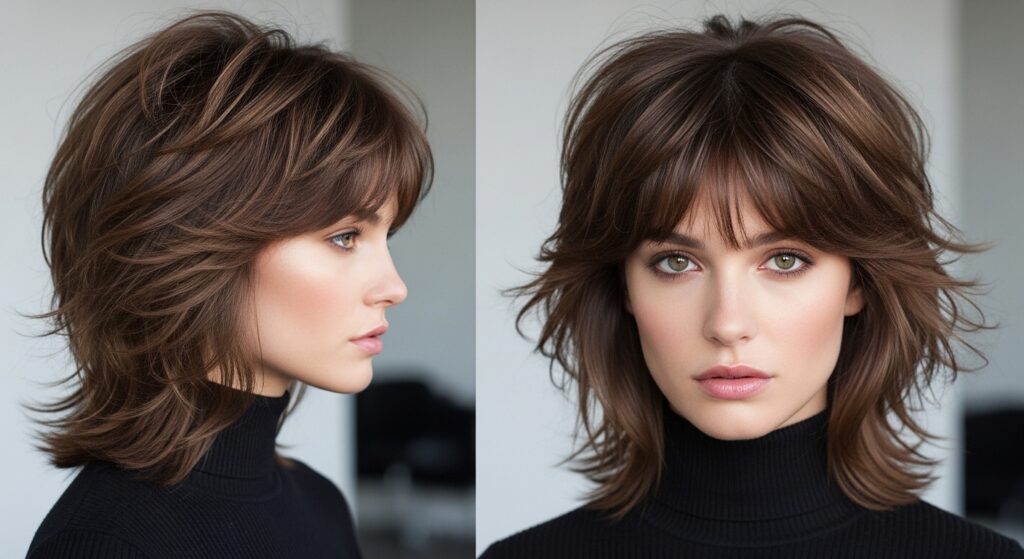
The wolf cut hairstyle is built around heavy layers, curtain bangs, and a deliberately undone finish. The goal is to add volume at the crown while creating movement and texture throughout the length. Once styled correctly, the layers frame your face and give you a shape that looks intentional without appearing overly polished.
A standard wolf cut follows this structural breakdown roughly:
- Crown layers: Short and voluminous to create lift and shape
- Mid-lengths: Graduated layers that add movement and remove bulk
- Ends: Wispy, textured tips that create the signature shaggy finish
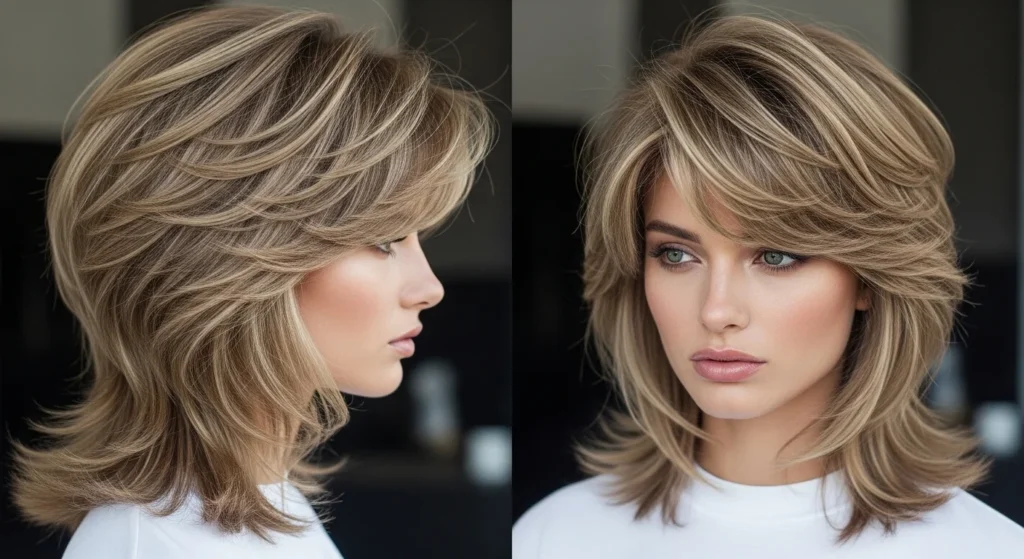
In practice, this means your stylist will cut layers at multiple lengths throughout the hair. Most people pair the wolf cut with curtain bangs, especially at the start, to frame the face and soften the overall look.
Best Wolf Cut Variations for Every Hair Type
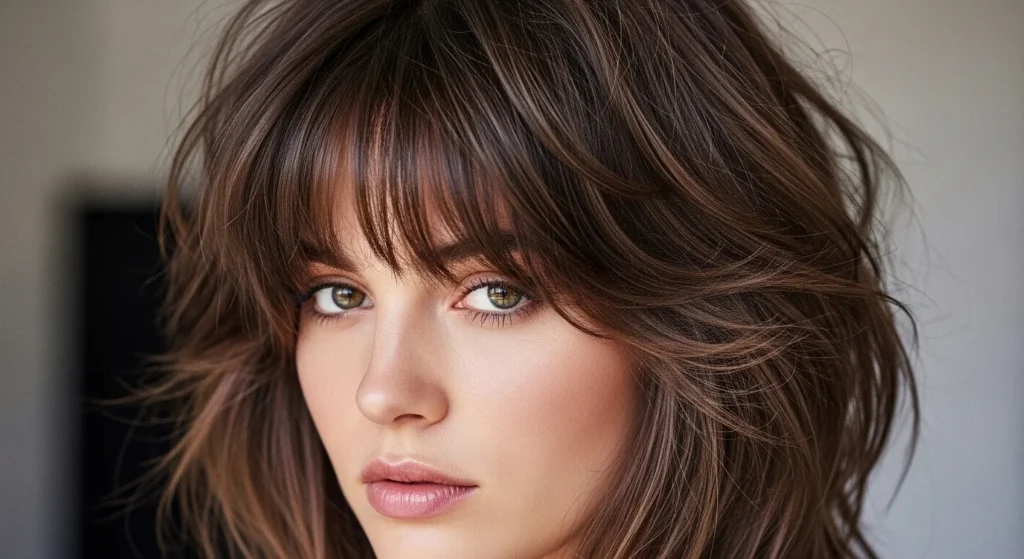
Choosing the right version of the wolf cut makes styling simple and flattering. The best wolf cut variations are adapted to your natural hair texture, face shape, and lifestyle. The table below shows the top wolf cut styles, who they suit best, and the key styling note for each.
| Wolf Cut Variation | Best For | Key Styling Note |
|---|---|---|
| Curly Wolf Cut | Naturally curly or wavy hair | Enhances curl definition without frizz |
| Straight Wolf Cut | Fine to medium straight hair | Adds body and movement with layers |
| Shaggy Wolf Cut | Thick or heavy hair | Removes bulk while keeping length |
| Short Wolf Cut | Shoulder-length or above | Bold, low-maintenance, and face-framing |
| Long Wolf Cut | Hair past the shoulders | Soft layers with maximum movement |
| Textured Wolf Cut | All hair types | Works best with sea salt spray and diffuser |
Layer and Volume Techniques Used Every Time
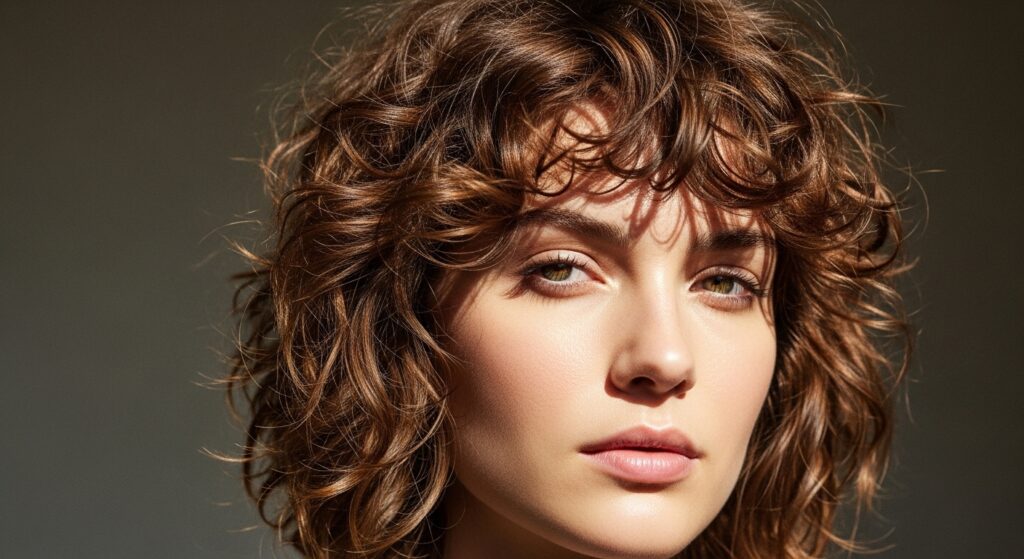
Layers are what make the wolf cut work. Without the right layering technique, the cut loses its signature shape. The best wolf cut haircuts include curtain layers that fall around the face, internal layers that remove weight without shortening length, and point-cut ends that create a wispy, undone finish. If you love trendy layered looks, explore more stylish haircut ideas for women here.
Volume at the crown is equally important. Your stylist should use razor cutting or point cutting techniques to thin the hair at the ends while leaving density at the roots. This creates the visual contrast between a voluminous top and a lighter, feathered finish.
Face Shapes That Suit the Wolf Cut Best
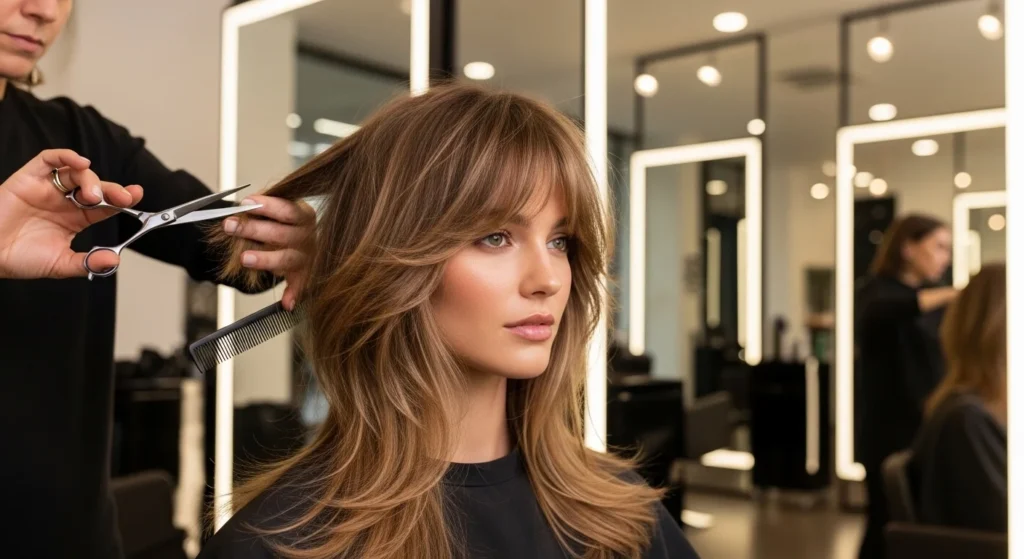
Not every hairstyle flatters every face shape, but the wolf cut is remarkably versatile. The curtain bangs and layered frame work together to balance most facial proportions.
- Oval faces suit virtually every wolf cut variation
- Round faces benefit from longer layers that elongate the face
- Square faces are softened by curtain bangs and feathered ends
- Heart-shaped faces look great with a mid-length wolf cut that adds width below the cheekbones
- Long faces work well with a shorter, shaggier wolf cut that adds width
- Diamond faces are complemented by soft curtain bangs and layered lengths
Easy Wolf Cut Styling Ideas to Start Your Routine Right
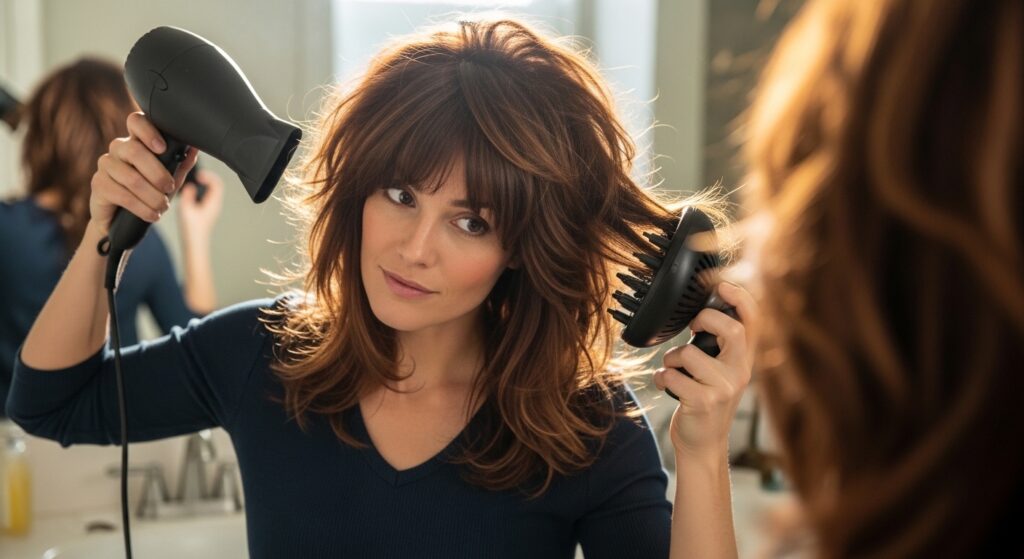
A strong styling routine sets the tone for your entire look. The good news is that wolf cuts are genuinely low effort once you know your technique. In addition, starting with the right base products means your layers fall into place with minimal effort.
A diffuser or a round brush is the foundation of most wolf cut styling routines. They add volume at the root and define layers without flattening the shape. A heat-protective spray also keeps your hair healthy while you style. Here are some easy options to rotate through your week:
- Air-dry with a sea salt spray for an effortless, textured finish
- Diffuse on low heat to boost curl and wave definition
- Blow-dry with a round brush for a polished, voluminous look
- Use a flat iron on the ends only to flip or curl for variety
- Apply a texturising cream through the mid-lengths and scrunch upward
You can prep your hair the night before by applying a leave-in conditioner and braiding loosely before bed. This creates natural waves overnight that make morning styling faster and easier.
Quick Wolf Cut Styling Routines for Every Day

Day-to-day styling is where most people find the wolf cut easiest to manage. The layers do most of the work, and a few key products keep the look fresh. In contrast to high-maintenance blowouts, the wolf cut works with your natural texture rather than against it.
Here are some reliable wolf cut styling routines that work for beginners and experienced followers alike:
Everyday Quick Styles
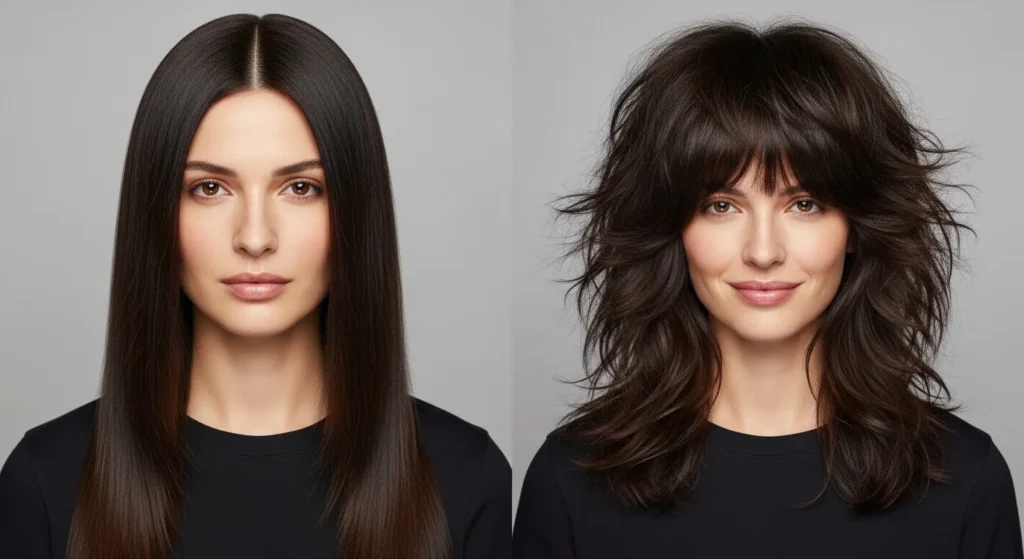
- 5-minute air-dry look: Apply sea salt spray to damp hair, scrunch, and let dry naturally
- Voluminous blowout: Use a round brush and blow-dryer, lifting at the roots for fullness
- Curtain bang reset: Straighten bangs down the centre and push gently outward with fingers
- Second-day refresh: Spritz dry shampoo at the roots and tousle layers with your fingers
- Messy textured style: Rub a small amount of matte paste between palms and work through the ends
Occasion-Ready Wolf Cut Styles
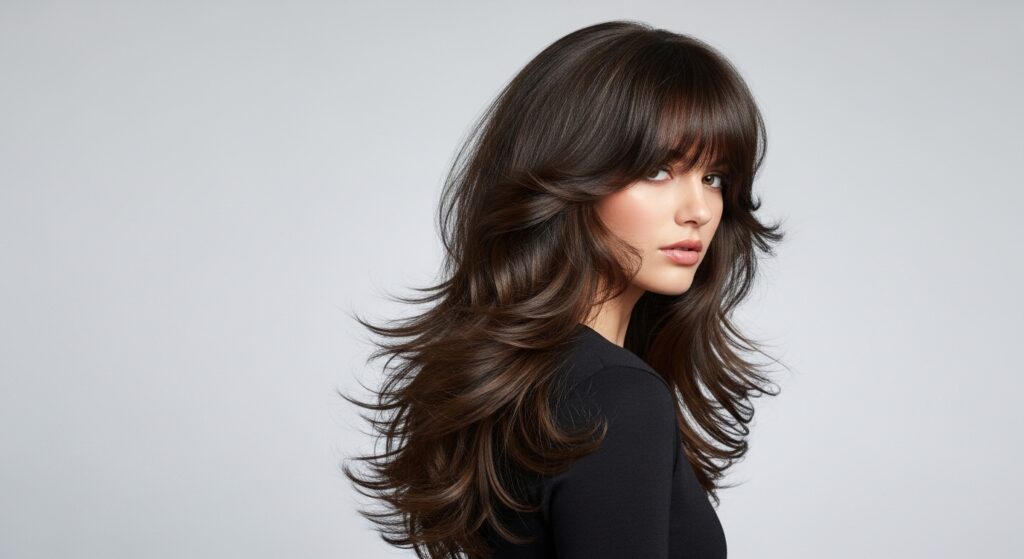
- Half-up style with face-framing pieces left loose at the front
- Low bun with layers pulled out to frame the face softly
- Tousled waves created with a large-barrel curling wand
- Sleek and straight with the curtain bangs blown forward over the forehead
- High ponytail with layered ends left loose for a modern shaggy effect
As a result of having a few go-to styles, you avoid the morning frustration that leads to throwing your hair in a ponytail every day. Knowing two or three quick routines keeps your wolf cut looking intentional and fresh all week.
Wolf Cut Products That Actually Deliver Results
Choosing the right products is optional but makes a significant difference, especially in the early weeks when you are still learning your styling rhythm. The key is choosing products that add texture and hold without weighing your layers down. Avoid anything labelled “smoothing” or “anti-frizz” as these products flatten the volume the wolf cut depends on.
- A lightweight sea salt spray for natural, effortless texture
- A volumising mousse applied at the roots before diffusing
- Dry shampoo to refresh volume between wash days
- A matte texturising paste for defining individual layers
- A heat protectant spray used before any hot tool styling
- A nourishing hair oil applied to the ends only to prevent frizz
Once you feel comfortable with the basics, you can also experiment with styling tools beyond a standard blow-dryer. Many wolf cut wearers swear by a Dyson Airwrap or a diffuser attachment for curly and wavy hair types to enhance their natural texture without heat damage.
7-Day Wolf Cut Styling Plan for Beginners
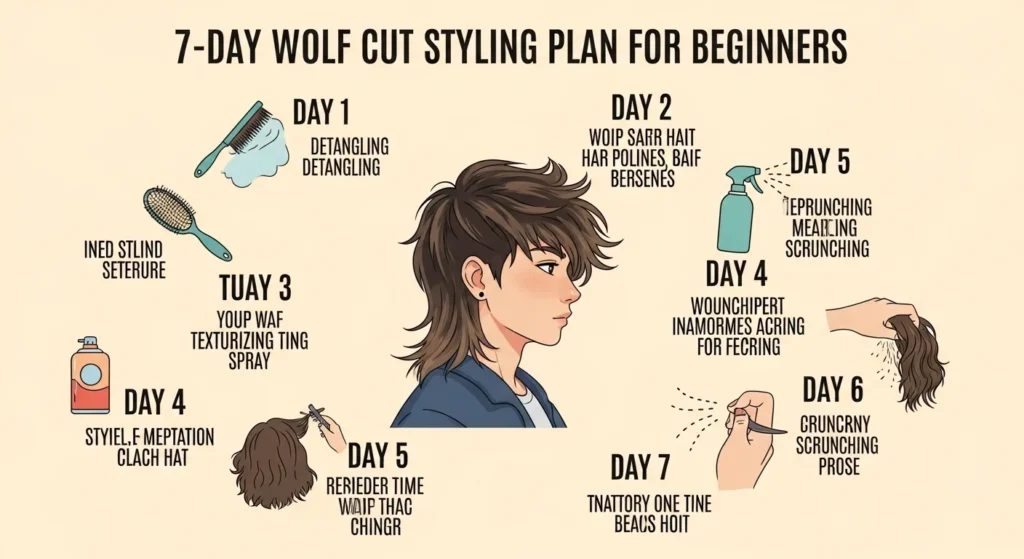
The table below shows a simple 7-day styling plan to help you get the most from your wolf cut. Each day uses a different technique so you can find what works best for your hair.
| Day | Morning Routine | Product Used | Finish |
|---|---|---|---|
| Monday | Air-dry naturally | Sea salt spray | Effortless and textured |
| Tuesday | Diffuse on low heat | Volumising mousse | Curly and defined |
| Wednesday | Blow-dry with round brush | Heat protectant | Voluminous and polished |
| Thursday | Second-day refresh | Dry shampoo | Lived-in and relaxed |
| Friday | Curl with large-barrel wand | Texturising paste | Wavy and glamorous |
| Saturday | Half-up style | Light-hold hairspray | Soft and face-framing |
| Sunday | Rest day — loose bun | Hair oil on ends | Nourished and low-effort |
Hair Products and Tools to Avoid With a Wolf Cut
Some products look useful but actively work against the wolf cut’s signature shape. The table below highlights the main products and habits to avoid and their best wolf-cut-friendly alternatives.
| Product/Habit | Why It Hurts Your Wolf Cut | Better Alternative |
|---|---|---|
| Heavy smoothing serums | Weighs layers down and kills volume | Lightweight hair oil on ends only |
| Fine-tooth combs on dry hair | Disrupts texture and causes frizz | Wide-tooth comb or fingers |
| Washing hair daily | Strips natural oils, reduces body | Wash every 2–3 days with dry shampoo |
| Tight elastic hairbands | Leaves a crease in layered ends | Spiral or fabric hair ties |
| Over-straightening | Removes all texture and movement | Straighten bangs only, not full length |
| Heavy conditioning masks on roots | Flattens crown volume | Apply masks to mid-lengths and ends only |
9 Rules of the Wolf Cut to Follow for Best Results
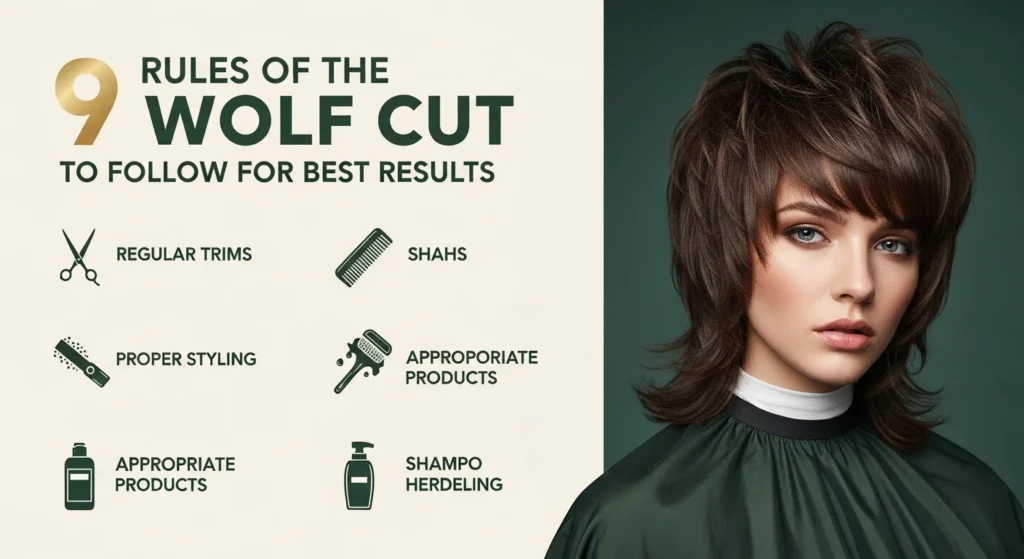
Following a few core rules makes the wolf cut much easier to maintain long-term. These are the principles most stylists and wolf cut wearers rely on from day one.
- Ask your stylist for curtain bangs: they are what make the wolf cut frame your face properly
- Go lighter on products than you think too much product kills the volume you need
- Avoid brushing dry hair aggressively scrunch and finger-comb instead
- Get a trim every 8 to 10 weeks to keep the layers sharp and the ends fresh
- Diffuse or air-dry wherever possible excessive heat straightens out the texture
- Use dry shampoo between washes to maintain root volume without overwashing
- Embrace the imperfection the wolf cut is designed to look slightly undone
- Be patient in the first two weeks while you learn how your layers behave
- Communicate clearly with your stylist about length, as wolf cuts vary significantly by how short the top layers are cut
Conclusion
The wolf cut hairstyle works by combining short crown layers, mid-length graduation, and wispy textured ends to create a bold, effortless look that flatters a wide range of hair types and face shapes. With the right variation, a simple weekly styling routine, and a few targeted products, this layered approach delivers a real and lasting style transformation for women who want to look and feel their best every day. And if you want your skin to look just as radiant as your new hairstyle, explore our expert skincare tips for healthy, glowing skin.
Frequently Asked Questions
What face shape is best for the wolf cut?
Oval faces suit almost every wolf cut variation. Round, square, and heart-shaped faces also work well, especially when paired with curtain bangs that add length and frame the face.
Can you get a wolf cut on short hair?
Yes. A short wolf cut works beautifully on hair at or above the shoulders. It creates a bold, shaggy shape with strong face-framing layers and is often paired with heavier curtain bangs.
How often should you trim a wolf cut?
Every 8 to 10 weeks is ideal to keep the layers defined and the ends looking fresh. Leaving it longer causes the shape to lose its structure and the ends to appear heavy rather than wispy.
Is the wolf cut high maintenance?
No, the wolf cut is one of the lower-maintenance layered styles available. The textured finish means it looks good even without much effort, and it works well air-dried or with minimal product.
Can you get a wolf cut with fine hair?
Yes, but ask your stylist to keep the layers longer and avoid cutting too many short layers at the crown. Fine hair benefits from the body the wolf cut provides without the heaviness that can flatten it.
Does the wolf cut work on curly hair?
Absolutely. The curly wolf cut is one of the most popular variations. The layers reduce bulk and enhance your natural curl pattern, especially when diffused from soaking wet rather than towel-dried.
What is the difference between a wolf cut and a shag cut?
The wolf cut is essentially a modern evolution of the shag. It tends to have more volume at the crown and a slightly more defined shape. The shag is generally flatter and more uniform throughout, while the wolf cut is more dramatic and face-framing.
Related Articles
Explore more topics in this category
Cozy Fall Hairstyles: 12 Gorgeous Looks to Try
Cozy fall hairstyles make it easy to refresh your look as the weather gets cooler.Loose waves, relaxed braids, low ponytails, and warm accessories create easy styles for autumn days. These looks work beautifully with sweaters, scarves, coats, and other seasonal outfits.You can wear them to work, brunch, date nights, weekend outings, or casual outdoor events.Most…
Fall Hair Color Trends 2026: 10 Shades to Try This Season
Fall hair color trends 2026 are already shifting away from last year’s cool, icy tones. This season leans warmer, richer, and a lot more forgiving for everyday wear. Touching up your natural color or going for a full change, these shades feel right for the months ahead. This guide walks through ten fall shades worth…

12 Egg Hair Masks for Repair and Healthy Hair
Dryness, breakage, frizz, and hair damage are common problems caused by heat styling, pollution, poor nutrition, and harsh products. Many girls struggle to restore softness and strength without spending money on expensive salon treatments. The good news is that one of the best natural hair repair treatments may already be in your kitchen: eggs. Eggs…

Emma
Hey there! Welcome to my blog. I love sharing practical tips, hidden secrets, and awesome hacks to help you live beautifully and smart. Stay tuned for more exciting updates!
Read More About Emma →