
Hyaluronic Acid Serum: Women’s Complete Skin Guide
Written by Emma ·
Hyaluronic acid holds up to 1,000 times its weight in water, yet most people still skip it in their daily routine. Dry patches, dull skin, and visible fine lines are all signs your skin is crying out for moisture. A good hyaluronic acid serum pulls water from the air and binds it deep within your skin, giving you that plump, healthy look without heaviness or grease.
For simple, effective tips on getting the most from your routine, Her Beauty Hacks covers everything you need to know, from application tricks to ingredient pairing, all in one place.
What Is Hyaluronic Acid Serum and How Does It Work?
Hyaluronic acid is a naturally occurring substance found in your skin, joints, and eyes. Your body produces it on its own, but levels drop with age, stress, and sun exposure. A hyaluronic acid serum delivers a concentrated dose of this molecule directly to your skin’s surface to restore what is lost.
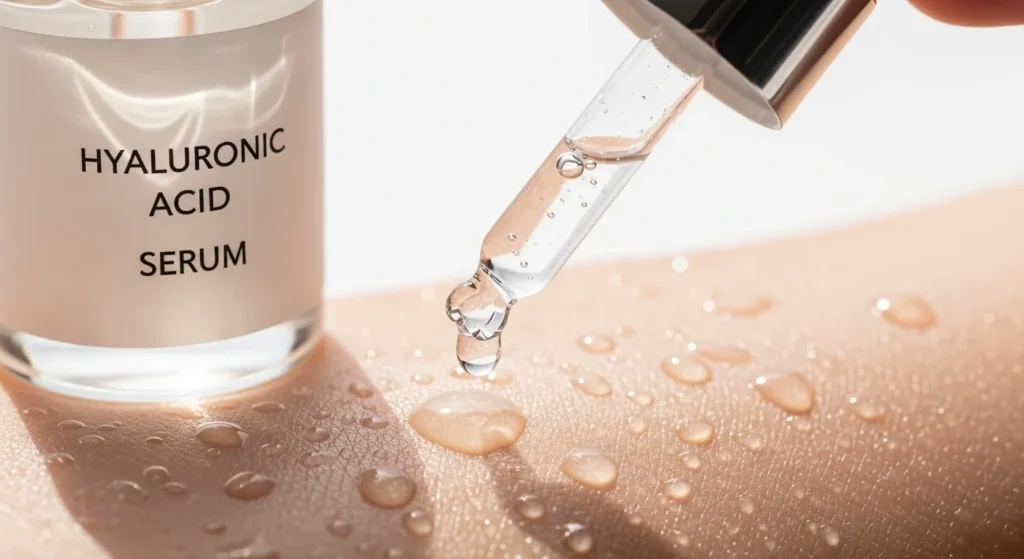
Unlike creams or moisturisers, a serum has a lightweight texture that sinks in quickly. It does not sit on top of your skin; it works below the surface to lock in moisture where it matters most.
Adding a hydrating serum to your skincare routine is one of the simplest upgrades you can make. Most serums contain hyaluronic acid in multiple molecular weights, which means they target both the outer and deeper layers of your skin at the same time.
Hyaluronic Acid Serum Benefits for Your Skin
The hyaluronic acid serum goes well beyond basic hydration. This single ingredient tackles multiple skin concerns at once, making it one of the most versatile actives in skincare today.
- Deep hydration: Draws moisture into the skin and holds it there throughout the day.
- Plumper skin: Fills fine lines from within and gives a smoother, more youthful appearance.
- Faster barrier repair: Strengthens the skin’s protective layer so it handles pollution and weather better.
- Brighter complexion: Well-hydrated skin reflects light more evenly, reducing dullness naturally.
- Reduced redness: Hyaluronic acid has gentle, calming properties that ease irritation over time.
- Compatible with actives: Works alongside retinol, vitamin C, and AHAs without causing additional sensitivity.
Hyaluronic Acid Serum Uses: How to Apply It the Right Way
Using correct hyaluronic acid serum makes a real difference to your results. Apply it incorrectly, and you may actually draw moisture out of the skin rather than into it.
- Cleanse your face thoroughly and pat it dry.
- Apply your serum to slightly damp skin. This gives the molecule something to bind to.
- Use 2 to 3 drops and press the serum gently into your skin with your fingertips.
- Follow immediately with a moisturiser to seal the hydration in.
- Apply morning and evening for consistent results.
| Tip: Skipping the moisturiser after application is one of the most common mistakes. Without a sealer on top, the serum can draw moisture from deeper skin layers, especially in dry or cold environments. |
What Skin Type Is Hyaluronic Acid Best For?

One of the biggest advantages of this ingredient is that it suits every skin type. It is non-comedogenic, which means it does not clog pores or trigger breakouts.
- Dry skin: Delivers the intense hydration dry skin needs without feeling heavy or waxy.
- Oily skin: Lightweight formula hydrates without adding shine, a great alternative to heavier creams.
- Combination skin: Balances moisture levels across oily and dry zones without overloading either.
- Sensitive skin: Free from fragrance and harsh actives, making it one of the gentlest options available.
- Mature skin: Targets fine lines and loss of firmness caused by natural drops in hyaluronic acid levels.
- Acne-prone skin: Supports healing without irritating active breakouts or leaving a greasy residue.
| Tip: If you have oily skin, look for a serum with a water-gel texture. These absorb faster and leave no sticky or greasy finish on the skin’s surface. |
Best Hyaluronic Acid Serum: What to Look For on the Label
Not every product lives up to its claims. The best hyaluronic acid serum will list HA high up in its ingredients, contain multiple molecular weights, and use a minimal, clean formula.
- Multiple molecular weights: Low-weight HA penetrates deeper while high-weight HA hydrates the surface. Look for both.
- At least 1% concentration: Lower amounts may offer little benefit beyond basic moisturisation.
- Fragrance-free formula: Fragrance is a common irritant and adds no skincare benefit.
- Niacinamide pairing: A serum that combines HA with niacinamide also helps tighten pores and even skin tone.
- Clean, short ingredient list: Fewer fillers mean a higher chance that the active ingredients will work well on skin.
| Tip: For those leaning towards a natural skincare approach, plant-derived hyaluronic acid (from fermented wheat or cassava) is a vegan-friendly option that performs just as well as its synthetic counterparts. |
Hyaluronic Acid Serum Side Effects to Know
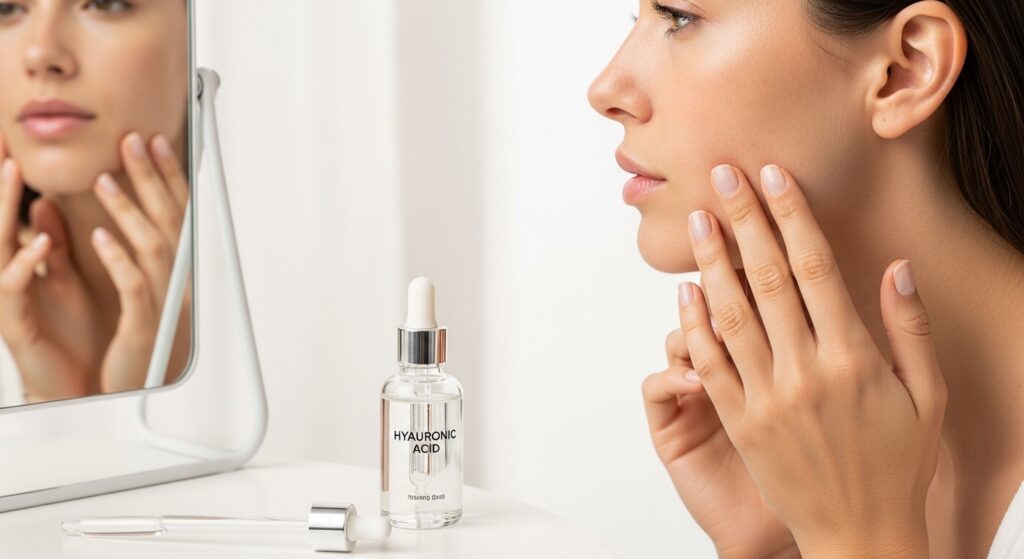
Hyaluronic acid serum side effects are rare, but they do occur in certain situations. Most people tolerate it extremely well, even with daily use over the long term.
- Redness or mild irritation: Usually caused by other ingredients in the formula, not the HA itself.
- Increased dryness: Happens when serum is applied to completely dry skin in a low-humidity environment.
- Breakouts: Rare, but some people react to stabilisers or preservatives in the product, not to HA.
- Allergic reaction: Extremely uncommon, but always patch test a new product before full application.
| Tip: If you notice persistent irritation, check the full ingredient list for known sensitisers. In most cases, switching to a purer, simpler formula resolves the issue quickly. |
Vitamin C vs Hyaluronic Acid: Which One Does Your Skin Need?
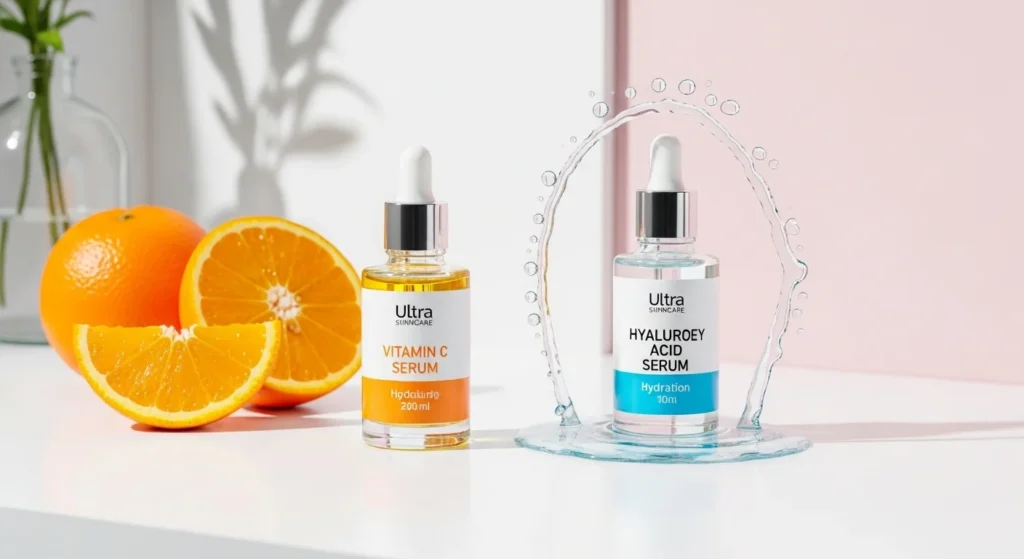
Both are popular skincare actives, but they do very different jobs. The table below compares the two so you can decide which fits your skin goal or use them together for stronger results.
| Feature | Hyaluronic Acid Serum | Vitamin C Serum |
| Primary benefit | Deep hydration and plumping | Brightening and antioxidant protection |
| Best for | Dry, dehydrated, or mature skin | Dull, uneven, or sun-damaged skin |
| Works best | Morning and evening | Morning with SPF |
| Skin type | All skin types | Most types; patch test for sensitive skin |
| Pairs well with | Retinol, niacinamide, peptides | Hyaluronic acid, SPF, ferulic acid |
| Visible results in | 24 to 48 hours (hydration) | 4to 12 weeks (brightening) |
| Main concern addressed | Dehydration, fine lines, barrier repair | Hyperpigmentation, oxidative stress |
| Tip: If used together, vitamin C and hyaluronic acid cover both protection and hydration. Apply vitamin C first, let it absorb for one to two minutes, then layer the hydrating serum on top. |
5 Signs You Need to Add a Hyaluronic Acid Serum Today
Your skin often signals what it is missing before you consciously notice. Here are the clearest signs that a moisture-binding serum should be your next addition.
- Skin feels tight after cleansing: Tightness is a direct sign that your barrier has been stripped and moisture is escaping.
- Fine lines look worse by midday: Dehydration emphasises lines; a serum refills the skin and softens them visibly.
- Makeup settles into creases: Well-hydrated skin holds foundation more smoothly and evenly throughout the day.
- Your moisturiser stops feeling like enough: A serum applied before your cream multiplies the hydration your skin receives.
- Skin looks dull or flat: Lack of water in skin cells reduces light reflection, causing a grey or tired appearance.
Final Thoughts
Hyaluronic acid serum is one of the most well-researched and widely recommended ingredients in skincare today, and definitely for good reason. It suits every skin type, works at multiple levels of the skin, and delivers visible results within days of consistent use.
In addition, it pairs safely with almost every other active in your routine, making it easy to layer without risk. Apply it to damp skin, seal it with a good moisturiser, and make it a daily habit. Then your skin will look and feel different.
Frequently Asked Questions
What is hyaluronic acid serum for?
It is used to hydrate, plump, and smooth skin by drawing moisture into the skin’s surface and deeper layers.
Is it good to use hyaluronic acid serum every day?
Yes, it is safe and effective for daily use, even morning and evening, and works best as a consistent part of your routine.
Can hyaluronic acid serum cause breakouts?
It rarely causes breakout issues. Other ingredients usually cause this because HA itself is non-comedogenic and very well-tolerated.
Related Articles
Explore more topics in this category

Acne Skincare That Actually Cleared My Skin Fast
For years, I kept making the same mistake with my skin. I tried every “miracle” product I saw online, followed random routines, and constantly switched between skincare trends hoping something would finally work. Instead of getting better, my acne just kept coming back in different forms. It took me a long time to understand that…

10 Sunscreen Tips for Everyday Skin Protection
Sunscreen is one of the most important skincare products you can use every day. Many people only apply sunscreen during summer or beach trips, but harmful UV rays affect your skin year-round. Sun exposure can lead to premature aging, dark spots, uneven skin tone, sunburn, and long-term skin damage. Daily sunscreen use helps protect your…

10 Summer Skincare Tips for Oily Skin Guide
Summer can be challenging for oily skin. Heat, humidity, and sweat often increase oil production, making your skin feel greasy, clogged, and prone to breakouts. Excess shine, enlarged pores, and acne can quickly become frustrating during hot weather. The good news is that oily skin can stay healthy and balanced with the right summer skincare…

Emma
Hey there! Welcome to my blog. I love sharing practical tips, hidden secrets, and awesome hacks to help you live beautifully and smart. Stay tuned for more exciting updates!
Read More About Emma →