
The Ultimate Skincare Routine Guide: Build Your Best Skin Ever
Written by Emma ·

Introduction
Your skin is the first thing the world sees and the way you care for it shapes how confident, radiant, and healthy you feel every single day. Whether you’re just beginning your skincare journey or looking to refine a routine that actually works, getting the fundamentals right makes all the difference. A well-structured daily skincare routine isn’t about owning a cabinet full of expensive products. It’s about understanding your skin, choosing the right ingredients, and being consistent.
At Her Beauty Hacks, skincare is more than a trend it’s a lifestyle. From beginner-friendly tips to expert-level routines for every skin type, it remains one of the most trusted beauty and skincare resources for women who want real results without the guesswork. This guide covers everything you need to know: morning and night routines, routines for oily and dry skin, acne-focused steps, and how to achieve that coveted glass skin glow. Read on and let your skincare transformation begin.
Why a Consistent Skincare Routine Matters
Most people underestimate what consistent skincare can do. Skin is a living organ it regenerates, reacts to the environment, and responds directly to the care it receives. Without a routine, the skin is left vulnerable to pollution, UV damage, dryness, breakouts, and premature aging.
A thoughtful skincare routine does three core things:
- Protects the skin barrier from environmental stressors
- Repairs damage that accumulates through the day and night
- Maintains the hydration and elasticity that keep skin looking youthful and fresh
Consistency is the non-negotiable factor. Products don’t work overnight, and no single ingredient is a miracle cure. What works is layering the right actives in the right order, morning and night, every day.

Understanding Your Skin Type Before Starting Any Routine
Before purchasing a single product, you need to understand your skin type. Using the wrong formulas no matter how luxurious can cause breakouts, dryness, excess oil, or irritation.
The Four Main Skin Types
Normal Skin — Balanced, not too oily or dry. Rarely breaks out and has minimal visible pores.
Oily Skin — Shiny appearance, enlarged pores, prone to blackheads and acne. Produces excess sebum throughout the day.
Dry Skin — Feels tight after cleansing, may appear flaky or dull. Lacks natural moisture and lipids.
Combination Skin — Oily in the T-zone (forehead, nose, chin) and dry or normal on the cheeks.
Sensitive Skin — Reacts easily to products or environmental factors. Often shows redness, stinging, or irritation.
Understanding which category your skin falls into will help you choose the right cleansers, moisturizers, and actives and avoid wasting money on products that aren’t designed for your needs.

The Morning Skincare Routine: Step by Step
Your morning skincare routine is about protection. You’re preparing your skin for everything the day throws at it sun exposure, pollution, makeup, and stress.

Step 1: Gentle Cleanser
Start with a gentle, non-stripping cleanser to remove oils and sweat that have built up overnight. If you have dry or sensitive skin, a cream or micellar cleanser works beautifully. For oily skin, a foaming or gel cleanser cuts through excess sebum without over-drying.
Step 2: Toner
A good toner restores the skin’s pH balance after cleansing. Look for hydrating toners with ingredients like hyaluronic acid, rose water, or niacinamide. Avoid alcohol-based toners, which can disrupt the skin barrier over time.
Step 3: Vitamin C Serum
Morning is the ideal time for antioxidant serums, particularly Vitamin C. It brightens the complexion, fades dark spots, and defends against free radical damage caused by UV exposure. Apply it to clean skin and allow it to absorb fully before the next step.
Step 4: Eye Cream
The skin around the eyes is the thinnest on the body. A lightweight, hydrating eye cream applied with your ring finger (the gentlest) helps prevent fine lines, puffiness, and dark circles.
Step 5: Moisturizer
Even oily skin needs moisture. A water-based, non-comedogenic moisturizer hydrates without clogging pores. For dry skin, look for richer formulas containing ceramides, squalane, or shea butter.
Step 6: Sunscreen (SPF 30 or higher)
This is the single most important step in any morning routine. Sunscreen protects against UVA and UVB rays, preventing premature aging, hyperpigmentation, and skin cancer. Apply generously as the last step, every single morning rain or shine.
The Night Skincare Routine: Repair While You Sleep
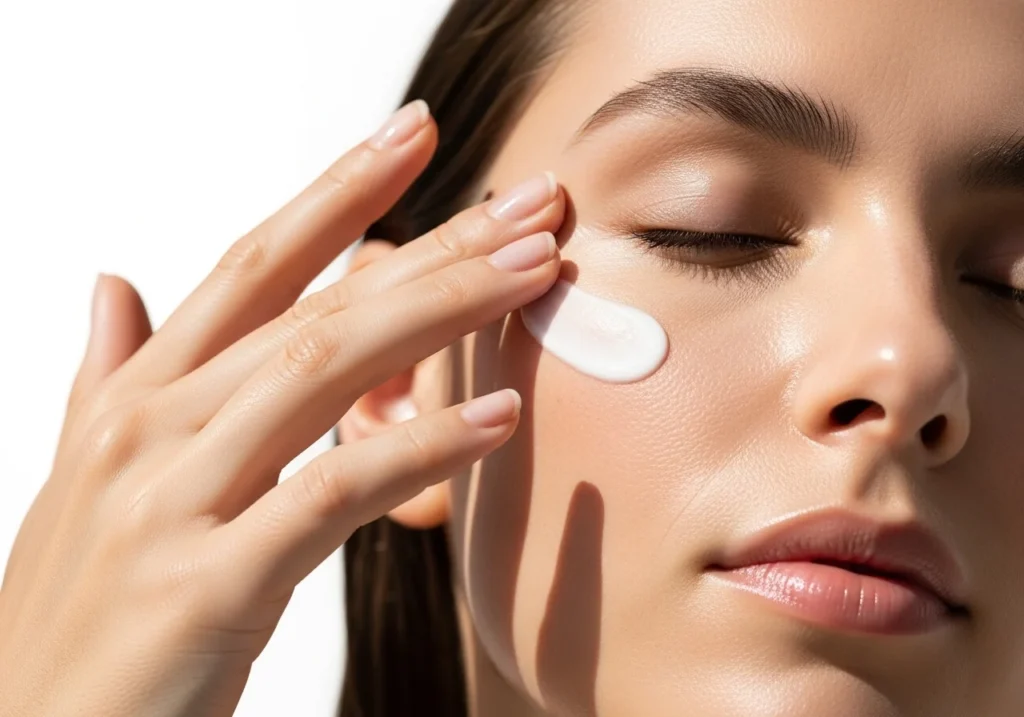
Nighttime is when your skin does its most active repair work. Cell turnover increases, and without the need for sun protection, you can introduce more powerful actives.
Step 1: Double Cleanse
If you wear sunscreen or makeup, double cleansing is essential. Start with an oil-based cleanser or balm to dissolve product buildup, then follow with your regular water-based cleanser to clean the skin itself.
Step 2: Exfoliation (2–3 Times Per Week)
Chemical exfoliants like AHA (glycolic or lactic acid) or BHA (salicylic acid) slough away dead skin cells, unclog pores, and accelerate cell renewal. Never over-exfoliate this weakens the skin barrier and causes more problems than it solves.
Step 3: Treatment Serum
This is where you target your specific skin concerns:
- Retinol for anti-aging, texture improvement, and acne control
- Niacinamide for pores, oil control, and pigmentation
- Hyaluronic Acid for deep hydration
- Peptides for firming and collagen support
Introduce actives one at a time to monitor how your skin responds.
Step 4: Eye Cream
A slightly richer eye cream at night supports collagen production and recovery around the delicate orbital area.
Step 5: Night Moisturizer or Face Oil
Finish with a nourishing night cream or a few drops of facial oil to seal in all the active ingredients and support the skin’s overnight repair cycle. Dry skin particularly benefits from occlusive ingredients like shea butter, marula oil, or petrolatum.
Skincare Routine for Oily Skin
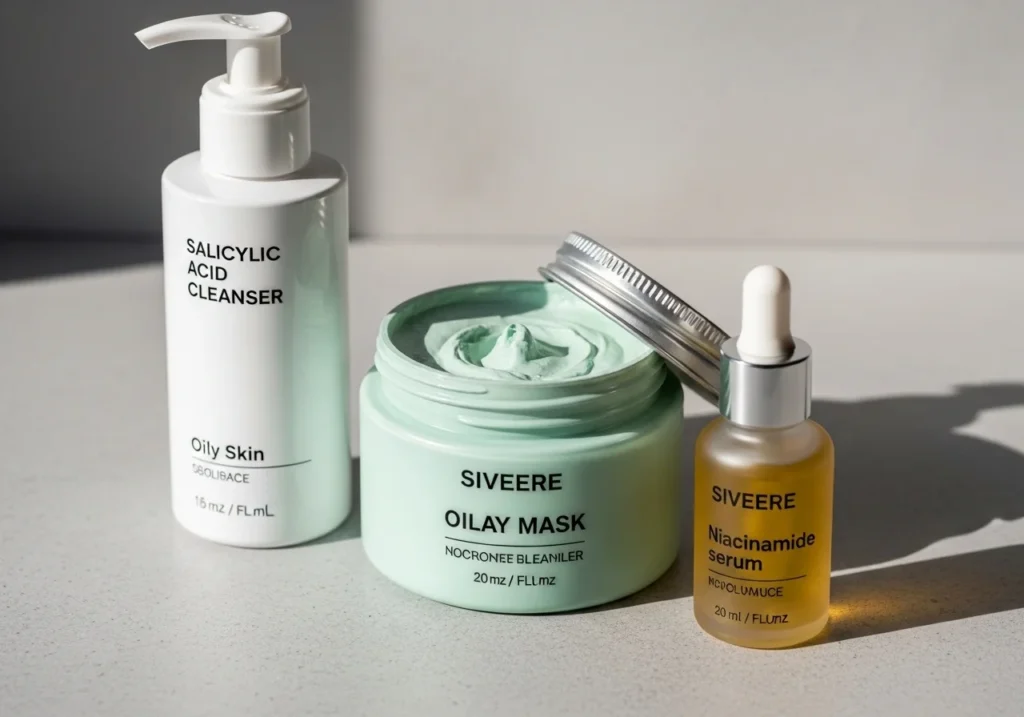
Managing oily skin doesn’t mean stripping it .it means rebalancing it. Harsh cleansers signal the skin to produce even more sebum as a defense mechanism.
Key ingredients to look for:
- Salicylic acid (BHA) to dissolve inside pores
- Niacinamide to regulate oil production
- Clay or kaolin in masks to absorb excess sebum
- Lightweight, gel-based moisturizers
Avoid: Heavy creams, occlusive oils, and alcohol-based toners that trigger rebound oiliness.
Those with oily skin often find that their skin actually improves dramatically with consistent hydration a lesson many learn only after years of fighting it. For more targeted advice on managing breakout-prone complexions, exploring dedicated tips for acne-prone skin on resources like Her Beauty Hacks can open up entirely new approaches.
Skincare Routine for Dry Skin
Dry skin thrives on moisture, barrier support, and gentle handling. The goal is to replenish lipids and keep water locked inside the skin cells.
Key ingredients to prioritize:
- Ceramides to repair and maintain the skin barrier
- Hyaluronic acid for multi-layer hydration
- Squalane and jojoba oil for nourishing without clogging
- Lactic acid (a gentle AHA) for mild exfoliation without irritation
Avoid: Foaming cleansers, alcohol-based products, and over-exfoliation.
Always apply moisturizer while the skin is still slightly damp from toner this locks in that extra layer of hydration before it can evaporate.

Acne Skincare Routine: How to Clear Your Skin Without Wrecking It
Acne is one of the most emotionally challenging skin concerns, and unfortunately, it’s also the most over-treated. Many people pile on product after product and end up with an irritated, compromised skin barrier that makes acne worse.
A Simple, Effective Acne Routine
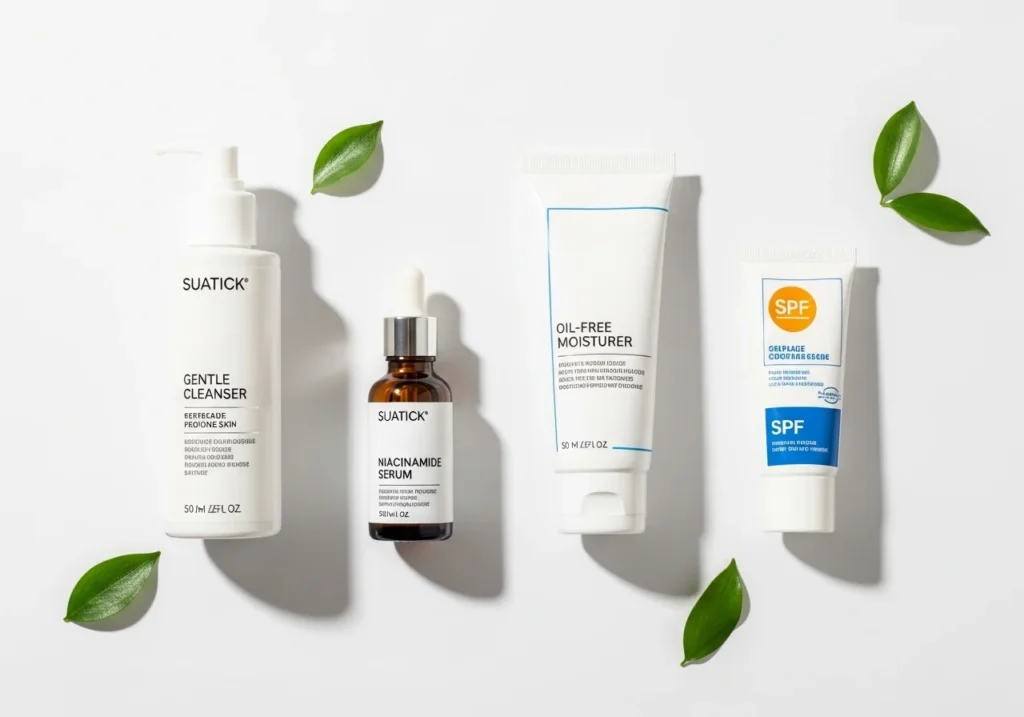
Morning: Gentle cleanser → Niacinamide serum → Oil-free moisturizer → SPF
Evening: Double cleanse → Salicylic acid toner or exfoliant (alternate nights) → Retinol or benzoyl peroxide spot treatment → Soothing, non-comedogenic moisturizer
Important tips for acne-prone skin:
- Never skip sunscreen — many acne treatments increase sun sensitivity
- Don’t touch your face throughout the day
- Change pillowcases frequently
- Introduce only one new product at a time
- Be patient — most treatments take 6–8 weeks to show visible results
Pairing an acne routine with good nail hygiene is an often-overlooked detail bacteria transferred from cuticles to the face can worsen breakouts. It’s a small habit change that connects beautifully with exploring nail care content for a holistic beauty approach.
How to Get Glass Skin: The Korean-Inspired Glowing Skin Routine
Glass skin refers to an almost translucent, poreless, dewy complexion the kind that looks freshly hydrated from within. Achieving it is less about a specific product and more about a philosophy: hydration stacked in multiple thin layers.
The Glass Skin Method
- Double cleanse thoroughly
- Apply a hydrating toner in 3–7 thin layers, patting each one in gently
- Use a hydrating essence (fermented ingredients are key here)
- Apply a lightweight serum with hyaluronic acid or snail mucin
- Lock it in with a water-based moisturizer
- Finish with a dewy sunscreen or illuminating primer in the morning
The result is skin that appears lit from within plump, bouncy, and almost reflective. Consistency over weeks is what creates the real transformation.
Common Skincare Mistakes to Avoid
Even the most well-intentioned routines can backfire. These are the mistakes that silently sabotage results:
- Over-cleansing — Washing more than twice daily strips the skin barrier
- Mixing incompatible actives — Vitamin C and AHAs/BHAs together can irritate; retinol and benzoyl peroxide together can deactivate each other
- Skipping moisturizer for oily skin — This only worsens oil production
- Using too many products at once — Less is almost always more
- Not applying SPF every day — This undermines every other step in the routine
- Expecting overnight results — Skincare requires weeks and months of commitment
Skincare Routine FAQs
Q: How many steps should a basic skincare routine have?
A: A foundational routine needs just four steps cleanser, moisturizer, sunscreen (morning), and a treatment serum (evening). Everything else is optional, depending on your skin goals.
Q: Can I use the same skincare routine morning and night?
A: Mostly yes, with one key difference: swap out sunscreen at night for a richer moisturizer or treatment product like retinol. Morning routines focus on protection; night routines focus on repair.
Q: How long does it take to see results from a new skincare routine?
A: For hydration, you may notice a difference within days. For acne, pigmentation, or anti-aging results, allow at least 4–8 weeks of consistent use before evaluating.
Q: Is it okay to skip skincare some nights?
A: Occasionally missing a night won’t ruin your progress, but regularity is what drives real results. At minimum, always cleanse before bed sleeping in sunscreen or makeup significantly increases breakout risk.
Q: What order should I apply skincare products?
A: The general rule is thinnest to thickest: cleanser → toner → essence → serum → eye cream → moisturizer → face oil → sunscreen (morning only).
Q: Can men follow the same skincare routine?
A: Absolutely. Skin type determines routine, not gender. Men may benefit from lighter formulas, and those who shave should incorporate soothing ingredients like centella asiatica or aloe to calm post-shave irritation.
Q: Do I need a separate eye cream?
A: Not necessarily. If your regular moisturizer is fragrance-free and gentle, it can be used carefully around the eye area. That said, a dedicated eye cream often contains more targeted ingredients for that delicate zone.
Q: Should I change my skincare routine seasonally?
A: Yes, ideally. Skin tends to need more moisture in cooler, drier months and lighter formulas in warmer, humid conditions. Adjust accordingly rather than rigidly sticking to one routine year-round.
Conclusion: Your Best Skin Starts With One Good Routine
Building a skincare routine isn’t about perfection —it’s about progress. Start simple, get to know your skin, and layer in more targeted products as you become more confident. The most effective routine is always the one you’ll actually stick to.
Whether you’re drawn to the multi-step glow of a glass skin routine, working through a persistent acne breakout, or simply trying to stay ahead of dehydration and dullness, the principles remain the same: cleanse, treat, moisturize, and protect.
Your skin deserves consistent care, quality ingredients, and a little patience. The results, when they come, are well worth every step.
For more expert skincare guidance, nail care inspiration, and beauty routines tailored to real women, explore everything Her Beauty Hacks has to offer your next favorite tip might be just one click away.

Related Articles
Explore more topics in this category

Acne Skincare That Actually Cleared My Skin Fast
For years, I kept making the same mistake with my skin. I tried every “miracle” product I saw online, followed random routines, and constantly switched between skincare trends hoping something would finally work. Instead of getting better, my acne just kept coming back in different forms. It took me a long time to understand that…

10 Sunscreen Tips for Everyday Skin Protection
Sunscreen is one of the most important skincare products you can use every day. Many people only apply sunscreen during summer or beach trips, but harmful UV rays affect your skin year-round. Sun exposure can lead to premature aging, dark spots, uneven skin tone, sunburn, and long-term skin damage. Daily sunscreen use helps protect your…

10 Summer Skincare Tips for Oily Skin Guide
Summer can be challenging for oily skin. Heat, humidity, and sweat often increase oil production, making your skin feel greasy, clogged, and prone to breakouts. Excess shine, enlarged pores, and acne can quickly become frustrating during hot weather. The good news is that oily skin can stay healthy and balanced with the right summer skincare…

Emma
Hey there! Welcome to my blog. I love sharing practical tips, hidden secrets, and awesome hacks to help you live beautifully and smart. Stay tuned for more exciting updates!
Read More About Emma →